Marketing Intelligence That Answers, Not Just Measures.

Mediaura Signal captures every marketing signal at the source, ties every campaign to the value it actually produced, and runs the measurement methods serious analysts use — anchored to experimental evidence and fused into one defensible answer.
Powered by Aura™
Powered by Aura™
The Promise
Three Questions Your
Marketing Data Should Answer.
Most marketing reports describe what happened. Executives need something different, and they need it in language they can take to a board meeting.
Are we winning?
Outcome status against target, in plain English. Color-coded. Reconciled across all four measurement methods, with confidence quantified.
Why?
The causal story behind the number. Which channels actually drove the result, which attribution shifts are noise, and what changed from prior period, synthesized into a paragraph, not a dashboard.
What's the call?
Specific, dollar-quantified recommendations with confidence intervals. Including the actions we rejected and why, so the reasoning is auditable.
Mediaura Signal answers these three questions automatically, every reporting period, generated by Aura against your live data. The dashboards underneath show the math; Aura shows the answer.
The Problem
Every Marketing Report You're Reading Is Built on Four Broken Assumptions
Traditional attribution platforms analyze your data. They don't fix it. And when the inputs are broken, better dashboards just give you prettier wrong answers.
Tracking Decays Silently
Tags accumulate. Properties duplicate. A developer ships a release, and a pixel quietly stops firing. By the time anyone notices, you've made three months of budget decisions on corrupted data.

Identity Fractures Across the Journey
A customer sees an ad on their phone, researches on a laptop, calls your front desk, and walks into a store. Your analytics sees four strangers. You paid to acquire one customer and got credit for none.
Platforms Grade Their Own Homework
Google reports Google's wins. Meta reports Meta's. Add them up and you've "driven" 240% of your actual revenue. You need an independent source of truth that has no stake in the answer.

Revenue Lives Where Your Tracking Doesn't
The transaction happens at the POS, in the CRM, on the phone, or at the front desk. If your attribution can't reach those systems, you're optimizing toward form fills and hoping they correlate with money. They usually don't.
Mediaura Signal is designed to solve all four as one connected system.
The Platform
Mediaura Signal
Powered by Aura. Four layers, one system. Each layer depends on the one beneath it, which is why bolt-on attribution tools fail and Mediaura Signal doesn't.
You don't need to change vendors to use it. Mediaura Signal is the measurement layer that works alongside whatever team is running your marketing: your current agency, your in-house team, or Mediaura itself. The truth layer should be independent of whoever's buying the media. That independence is what makes the numbers trustworthy.
Signal Tracker
First-party signal capture, built for the systems your business actually runs on.
The tracking infrastructure runs on your domain. It captures events that off-the-shelf pixels miss and bridges systems that have spent the last decade refusing to talk to each other: Leadfeeder to HubSpot, CallRail to your CRM, POS to the ad platforms. HIPAA-compliant by design, BAA included, live in production today.
Learn about Signal Tracker →Identity Resolution
One customer, not four strangers.
Every event the Signal Tracker captures gets stitched to a single customer record across devices, sessions, and offline touchpoints. Privacy-compliant, first-party, built for a world without third-party cookies.
Revenue Mapping
Connecting marketing to money, not proxies for money.
Every closed transaction (POS, CRM, EMR, phone, walk-in) is mapped back through the customer journey to the campaigns, creatives, and channels that earned it. Cross-channel. Cross-device. Across long sales cycles.
The Mediaura Causal Engine (M-CE)
Causal evidence with quantified confidence. Not attribution.
A six-layer causal modeling pipeline that runs predictive and causal models in parallel, validates them against the realest outcome your business records — booked revenue where you have it, verified expected value where you don't — and refuses to publish numbers it can't defend. When M-CE says a channel drove $340K last month, it means that channel caused $340K that wouldn't have happened otherwise: the confidence interval is visible, the future-spend placebo test confirms the model isn't measuring reverse causality, and the James-Stein hierarchical pooling diagnostics are auditable on click.
This is the math your CFO has been asking marketing for since 2015.
Learn about M-CE →Four layers of infrastructure. One AI analyst that knows how to use all of them.
Meet Aura ↓The Methodology
Four Measurement Methods. One Defensible Number.
Most platforms pick one method and hope. Mediaura runs all four, because each one is the right answer to a different question.
Marketing measurement has four legitimate methods, and they don't agree with each other. They shouldn't: they're answering different questions. The work that matters is reconciling them into a single number you can take to your board, with the confidence in that number quantified and the disagreements visible.
Funnel reporting
What happened?
The descriptive view. Impressions, clicks, leads, transactions, by channel, by location. The daily operational truth. Necessary, but never causal.
Multi-touch attribution
Who touched what?
The correlational view. How customers moved through the journey and which touches saw the converters. Useful for journey design and creative iteration. Not the answer to "did the marketing work."
Causal experiments
What did the marketing actually cause?
This is M-CE territory: geo-holdouts, natural-experiment detection, observational lift with quantified uncertainty. The only layer that answers the counterfactual: what would have happened without the spend.
Marketing mix modeling
How should the budget combine?
Industry-standard MMM, run as two engines (Meridian and Robyn) in parallel, with their agreement itself becoming a confidence signal. Captures adstock, saturation, cross-channel interactions, baseline demand.
The Reconciliation Engine
Models you can't fully trust. Experiments you can. We anchor the first to the second.
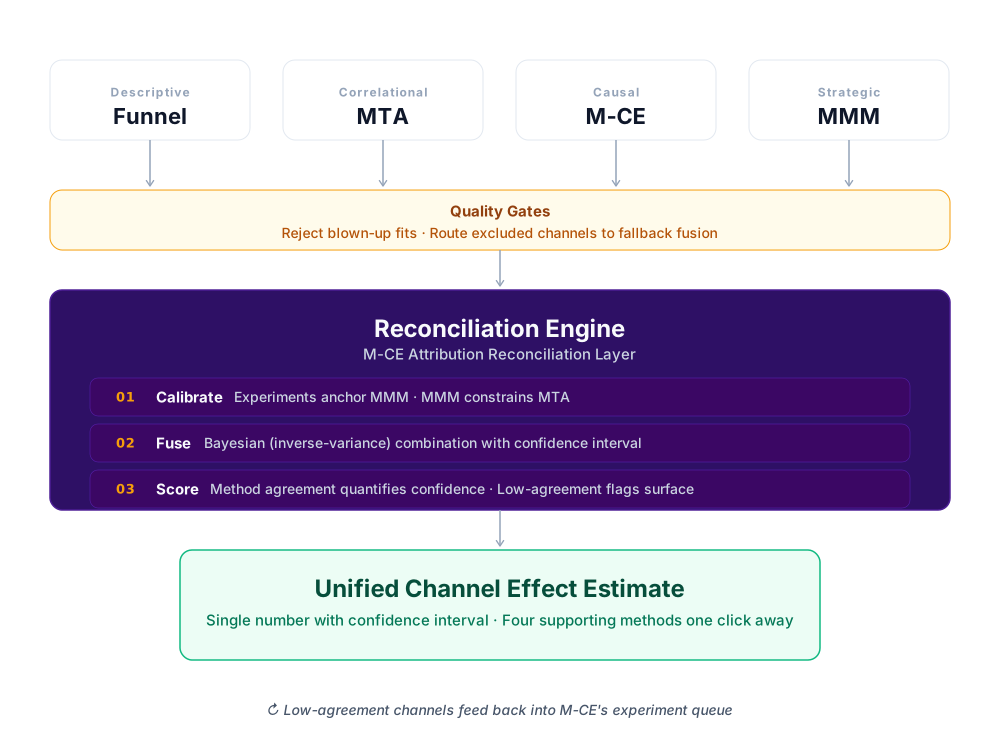
Four methods answer four different questions — that's why we run them all. But only three are causal engines that fuse into one number: M-CE's Bayesian Ridge, plus Meridian and Robyn. Left alone, those three are correlated views of the same data, and three correlated models agreeing proves very little.
So we don't lean on their agreement — we anchor them to experimental ground truth (geo-holdouts, natural experiments), fuse them into a single posterior, and let the confidence widen wherever the evidence is thin. When the engines and the experiment line up, the number is tight. When they don't, that channel becomes the next holdout. The anchor is what makes the fusion trustworthy — not the number of engines.
Four methods we use. Three engines we fuse. One anchor that makes the number trustworthy.
The Strategic View
We rank by value, not volume.
Count conversions, and the channel flooding you with cheap ones looks like your best performer. Weight those conversions by what they're actually worth, and the ranking can flip entirely — the channel driving fewer, higher-value outcomes is usually the one earning the money.
Most attribution counts events and calls it performance. Mediaura Signal weights every outcome by the value it carries, so budget follows dollars, not volume — and the ad platforms get told what's worth bidding toward, not just what converts.
Volume is what most tools count. Value is what your budget should follow.
What you see
One number for the board, with confidence visible. The four supporting estimates, one click away. The questions that aren't yet answered, queued as the next experiment.
Strategic decisions use the fused number. Tactical decisions use the operational view. The platform enforces that distinction, so nobody screenshots the strategic number and uses it to justify a daily campaign call.
Bold patterns.
Boring rigor.
That's the combination.
The Intelligence Layer
Meet Aura
Your AI Marketing Analyst, built so it can't make things up.
Aura is the agentic AI layer at the center of Mediaura Signal. It answers questions about your marketing performance in plain English. Every number it cites came from a tool that queried your production data. There is no version of Aura where a language model invents a KPI and hands it to your CFO.
Ask Aura anything
- "Which campaigns drove the most patient admits last quarter?"
- "Why did our cost per acquisition spike in Cincinnati last week?"
- "What would happen if we moved 20% of our Meta budget to Google?"
- "Do all four measurement methods agree on paid search this month?"
Aura doesn't do the math.
Aura calls the tools that do the math.
When you ask Aura a question, it identifies what data it needs, issues structured tool calls into your live systems, waits for real results, and only then formulates an answer. The model cannot invent a tool, cannot pretend a tool returned data it didn't, and cannot produce a quantitative claim until a tool has returned a real value. The architecture makes hallucination structurally impossible, not just "carefully prompted."
Aura calls into Signal Tracker for the raw signal, Identity Resolution to stitch the journey, Revenue Mapping to find the dollars, the Mediaura Causal Engine for the causal model, Meridian and Robyn for the MMM view, and the reconciliation engine for the fused estimate. Every number it cites came from a tool that queried your real data.
Autonomous Monday briefing
Aura, every Monday at 7 AM.
Every Monday morning, Aura autonomously reviews the entire previous week of data, every channel, every location, every campaign, every causal coefficient, and writes a 400 to 600 word narrative report with action items. It's emailed to your team and waiting when they sit down with their first cup of coffee.
It's not a templated dashboard export. It's Aura, autonomously deciding what mattered most this week and explaining it in prose. Some weeks the headline is a campaign that crushed. Other weeks it's a coefficient that moved meaningfully. Other weeks it's a foot traffic pattern that's worth investigating. The Monday email is what creates the reason for your team to look at the dashboard at all.
Bold patterns.
Boring rigor.
What Changes When You Run on Mediaura Signal
Industries
Specialized for How Your Revenue Actually Happens
Every industry has a different attribution failure mode. Mediaura Signal is configured per vertical to solve the one that's costing you money.

Restaurants & Multi-Location Retail
Know which campaigns drove sales by location, by daypart, by dollar.
Most restaurant marketing tools count clicks and online orders. Mediaura Signal counts the check at the table. We connect your ad spend to your POS (Toast, Square, Olo, whatever you run) across every location, and we run the four-method reconciliation per location, so a Cincinnati Tuesday doesn't get measured the same way as a Charleston Saturday.
- Per-location causal measurement (not just attribution)
- POS integration (Toast, Square, Olo, and more)
- Foot traffic and trade-area modeling via Placer.ai
- Daypart and LTO performance, tied to revenue
- Multi-location budget reallocation based on actual measured lift
- Natural-experiment detection (new openings, competitor closures, weather events) as the causal anchor
Healthcare & Behavioral Health
HIPAA-compliant causal measurement from the first click to the patient's admission.
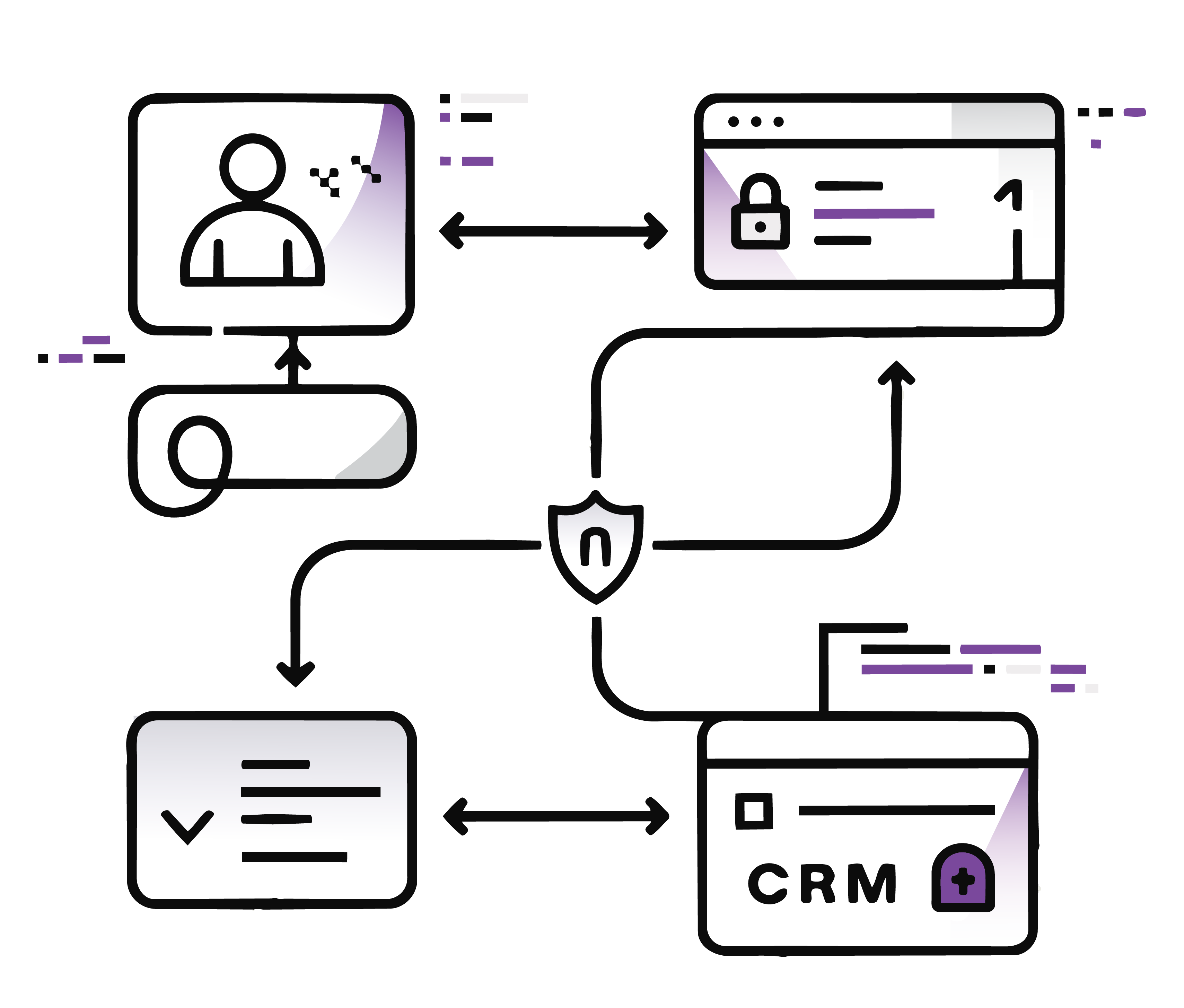
In healthcare, the conversion isn't a form: it's an admission. And the path from ad to admit runs through PHI-restricted systems where most attribution tools legally cannot operate. Mediaura Signal was built from the ground up for this. The four-method reconciliation includes BizDev-influenced admits as a second outcome, so digital's halo into referral-driven admits gets measured instead of guessed at.
In behavioral health the conversion is an admission, and the dollar figure is the case's verified expected value — insurance-verified, not a booked receipt that posts months later. Signal measures against that expected value from the first click forward.
- HIPAA-compliant signal infrastructure (BAA included)
- Causal measurement from first click → inquiry → assessment → admit
- Compliant integration with EMRs, CRMs, and call tracking
- Channels ranked by patient value, not admit count — a high-value case weighted as worth more than a short stay
- Per-channel acquisition cost with calibrated confidence intervals (the tactical view, distinct from the strategic value ranking)
- Digital halo into BizDev admits, measured (not guessed)
B2B & Professional Services
Track revenue across 6-month sales cycles, not 6-day attribution windows.
Standard analytics gives up after 30 days. Your sales cycle is 127. Mediaura Signal traces digital influence across the entire lifecycle of a deal, from the first anonymous visit to the closed contract, and reconciles it against your CRM, so marketing finally gets credit for the pipeline it actually built. The attribution and reconciliation layers are live today; the full causal modeling layer for long-cycle B2B deals is in active development through 2026.
- Long-cycle, multi-touch journey reconstruction
- CRM integration (Salesforce, HubSpot, Pipedrive)
- Account-level journey reconstruction
- Pipeline influence reporting your CFO will accept
- Causal modeling for long-cycle B2B in active development (2026 rollout)
See What's Hiding in Your Marketing Data
Most demos we run uncover broken tracking and missing revenue inside the first fifteen minutes. We'll show you yours.
What happens next:
- 30-minute working session with a Mediaura engineer (not a sales rep)
- Live audit of your current tracking and attribution gaps
- A specific, prioritized list of what's broken and what it's costing you
- Industry-relevant case studies and a clear path to value